

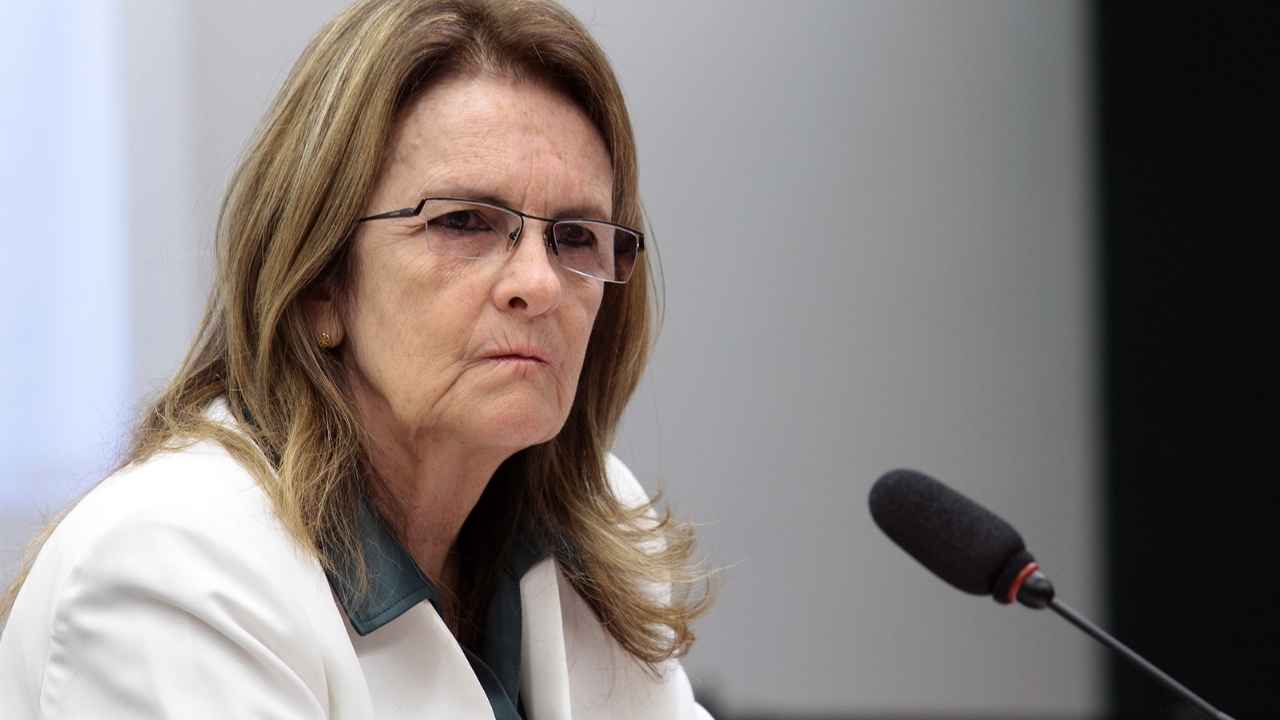
In the male-dominated world of global energy giants, Maria das Graças Silva Foster—affectionately known as Graça Foster—stands out as a symbol of resilience and ambition. Born on August 26, 1953, in the rural town of Caratinga in Minas Gerais, Brazil, Foster rose from humble beginnings in a Rio de Janeiro favela to become the first woman to helm Petrobras, Latin America’s largest company and one of the world’s top oil producers. Her journey is a testament to meritocracy in Brazil’s state-run oil sector, marked by groundbreaking achievements, an unyielding work ethic, and the shadow of one of the country’s most explosive corruption scandals.
From Humble Roots to Engineering Prodigy
Foster’s early life was far from privileged. Growing up in a favela on the outskirts of Rio de Janeiro, she navigated poverty with a fierce determination that would define her career. Undeterred, she pursued higher education, earning a bachelor’s degree in chemical engineering from Fluminense Federal University, followed by a master’s in the same field from the Federal University of Rio de Janeiro. She later complemented her technical expertise with an MBA in economics from Fundação Getúlio Vargas, one of Brazil’s premier business schools.
Her entry into Petrobras, Brazil’s state-controlled oil behemoth, came in 1978 as an intern, leveraging her fresh master’s degree.
By 1981, she was hired full-time as a chemical engineer and embarked on a 30-plus-year ascent through the company’s ranks. Foster’s early roles immersed her in the technical heart of the industry: she managed operations in the Gas and Energy Business Unit, contributed to research at the Leopoldo Américo Miguez de Mello Research and Development Center, and oversaw projects at the Transportadora Brasileira do Gasoduto Bolivia-Brasil (TBG), a key pipeline importing natural gas from Bolivia. Notably, she became the first woman to step onto a Petrobras offshore oil platform, where she personally installed production equipment—a feat that underscored her hands-on approach and shattered gender barriers in a rugged field.
A Meteoric Rise in Leadership
Foster’s trajectory accelerated in the early 2000s, coinciding with the rise of Brazil’s leftist Workers’ Party (PT) under President Luiz Inácio Lula da Silva. In 2003, she joined the federal Ministry of Mines and Energy as Secretary for Oil, Natural Gas, and Renewable Fuels, working directly under then-Minister Dilma Rousseff—a relationship that would prove pivotal. Their shared PT affiliation and mutual respect forged a bond; Rousseff, who later chaired Petrobras’ board from 2003 to 2010, recognized Foster’s blend of technical prowess and political alignment.
Returning to Petrobras in 2005, Foster took the helm of Petroquisa, the company’s petrochemicals division, before becoming CEO of Petrobras Distribuidora (BR Distribuidora) in 2006—a role that also included serving as its financial director. By 2007, she was elevated to the Petrobras board as Director of Gas and Energy, where she excelled in expanding the company’s gas infrastructure and renewable energy initiatives.
In February 2012, at age 58, Foster was appointed CEO, succeeding José Sérgio Gabrielli and becoming the first woman to lead a major global oil company. Rousseff, now president, personally attended her inauguration, praising her “ability, loyalty, and companionship.” With Petrobras boasting a $225 billion investment plan over four years and ranking as the fourth-largest energy company worldwide, Foster inherited a powerhouse—and a powder keg.
Achievements and the “Iron Lady” Nickname
Foster’s nickname, “Caveirão”—after the armored vehicles used in Rio’s favelas—captured her relentless drive and no-nonsense style. Colleagues marveled at her “iron health” and ability to maintain laser focus amid grueling hours, often working without fanfare in public spaces. Under her leadership, Petrobras emphasized international standards for quality, safety, and environmental compliance, aligning projects with global best practices to boost competitiveness.
She championed Brazil’s pre-salt oil discoveries, pushing for technological innovation in deep-water exploration while navigating fuel-price controls that strained finances. Foster also served on the boards of subsidiaries, including Petrobras Biocombustíveis and the Brazilian Institute of Oil, Gas, and Biofuels (IBP), thereby amplifying her influence in sustainable energy. By 2012, Petrobras had become Latin America’s most valuable brand, a nod to Foster’s steady hand amid volatile markets.
Yet, her tenure demanded balancing technical imperatives with political pressures—a hallmark challenge for Petrobras, where government influence often trumped market logic. As one analyst noted, “Her main challenge will be to balance political and technical decisions.”
Scandals and Resignation: The Lava Jato Shadow
Foster’s legacy is inextricably linked to Operation Lava Jato (Car Wash), Brazil’s largest corruption probe, which erupted in 2014. The scandal revealed a web of kickbacks, overpriced contracts, and bribes totaling billions—allegedly siphoned from Petrobras to politicians, executives, and suppliers, fueling PT election campaigns. Authorities estimated losses at $3.7 billion to $28 billion, eroding Petrobras’ market value and delaying financial audits.
Foster was not formally accused of wrongdoing but faced intense scrutiny for allegedly ignoring warnings about graft in contracts she oversaw. Earlier controversies, like 2010 reports of 42 contracts awarded to her husband Colin Foster’s firm C. Foster without bidding—totaling R$614,000 ($350,000)—added fuel, though Petrobras maintained these predated her CEO role and fell outside her purview.
By late 2014, mounting pressure—from falling oil prices, a R$61.4 billion asset writedown, and public outrage—forced her hand. Protesters clanged pots outside her Rio home, and Rousseff, despite their friendship, signaled change. On February 4, 2015, Foster resigned alongside five directors, citing the need for a fresh start amid “resizing” efforts: slashing investments, selling assets, and curtailing exploration to stem debt. Petrobras shares surged 6% on the news, as investors hoped for a “house cleaning.”
In a tearful congressional testimony during the CPMI probe, Foster defended Petrobras’ engineering integrity, pausing 17 seconds to compose herself before pressing on—a rare glimpse of vulnerability from the “Iron Lady.” The scandal’s toll was personal, too: once known for her robust health, she began medication for stress-induced stomach pains.
Legacy: A Pioneer Amid Controversy
Post-resignation, Foster retreated from the spotlight, her exact whereabouts and activities remaining private as of 2025. Yet her impact endures. As the “first female CEO of a major oil company,” she inspired a generation of Brazilian women in STEM and business, where female CEOs in large firms hovered around 14% during her era. Critics argue her ouster was inevitable, given Lava Jato’s crosshairs, but supporters hail her as a scapegoat for systemic rot that predates her tenure.
Graça Foster’s story—from favela child to Petrobras pinnacle—embodies Brazil’s complex energy narrative: innovation clashing with politics, ambition shadowed by corruption. In an industry still grappling with gender parity and ethical reforms, her legacy challenges future leaders to fuse technical excellence with unyielding integrity. As Brazil eyes green transitions, Foster’s trailblazing path reminds us that true power lies not just in boardrooms, but in breaking barriers long deemed unbreakable.