

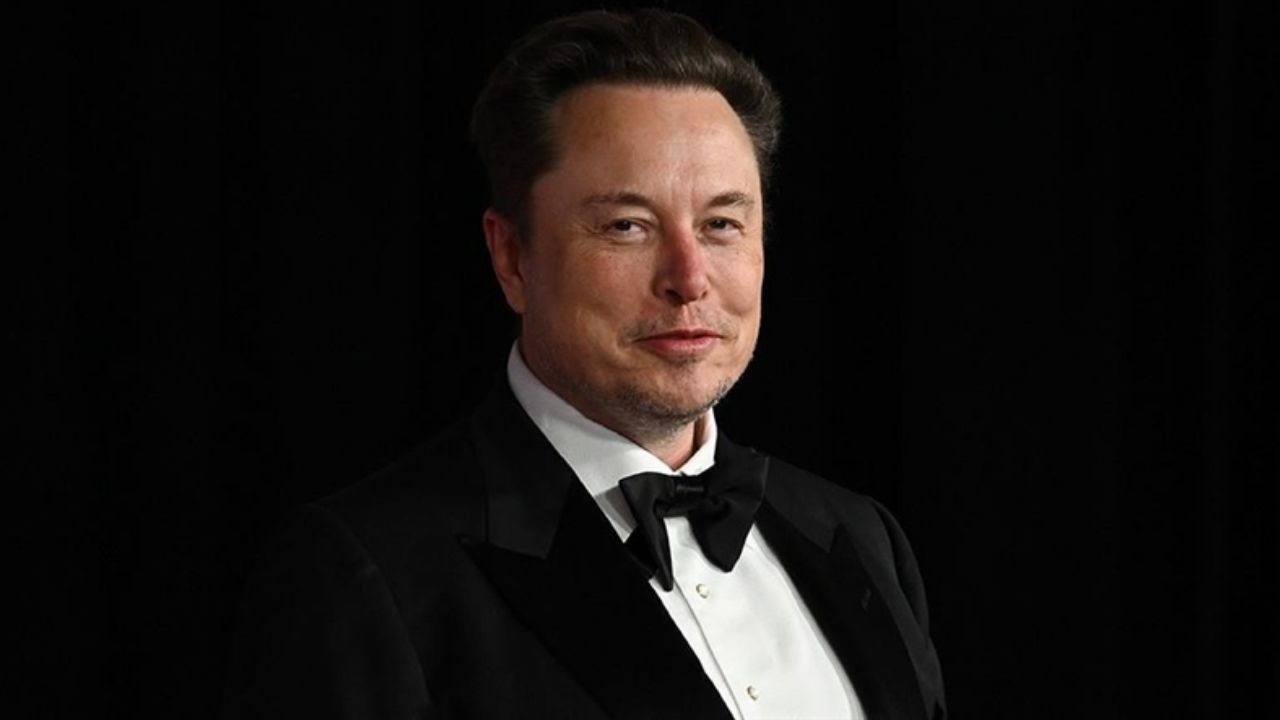
Elon Musk stands as one of the most influential and successful entrepreneurs of the modern era. Born on June 28, 1971, in Pretoria, South Africa, to a Canadian mother and South African father, Musk displayed an early aptitude for technology and business. By age 12, he had sold a self-coded video game called Blastar for $500. After moving to Canada at 17 and later to the United States, he attended the University of Pennsylvania, earning degrees in physics and economics. This dual foundation in science and business would define his career, blending ambitious engineering with sharp entrepreneurial instincts.
Musk’s first major success came in the internet boom of the late 1990s. In 1995, he co-founded Zip2, an online city guide software company, which provided maps and directories to newspapers. Compaq acquired Zip2 in 1999 for approximately $307 million in cash and stock, netting Musk around $22 million. He quickly reinvested most of his proceeds into his next venture: X.com, an online financial services company. X.com merged with Confinity in 2000, forming PayPal, which revolutionized online payments. eBay purchased PayPal in 2002 for $1.5 billion in stock, earning Musk about $180 million. These early exits proved Musk’s ability to identify scalable opportunities in emerging digital markets and execute exits that funded far larger ambitions.
Rather than retiring comfortably, Musk pursued ventures with profound societal impact. In 2002, he founded SpaceX to reduce space transportation costs to enable humanity to become multi-planetary. At the time, the space industry was dominated by government agencies and a few legacy contractors, with launches costing hundreds of millions of dollars. SpaceX disrupted this through reusable rocket technology. The Falcon 1 became the first privately funded liquid-fueled rocket to reach orbit in 2008. Falcon 9’s reusable first stage, which successfully landed in 2015, slashed launch costs dramatically. By the mid-2020s, SpaceX had conducted hundreds of successful missions, deployed the Starlink constellation (providing broadband internet to millions worldwide, including remote and underserved areas), and sent private astronauts to the International Space Station. Starship, SpaceX’s next-generation fully reusable vehicle, has advanced through multiple test flights, positioning the company to enable Mars colonization—a long-term Musk vision.
Parallel to SpaceX, Musk joined Tesla Motors (now Tesla, Inc.) in 2004 as chairman and lead investor, becoming CEO in 2008. Tesla transformed the automotive industry by proving electric vehicles (EVs) could be high-performance, desirable, and profitable. The Roadster (2008) demonstrated feasibility, Model S (2012) set luxury benchmarks, and Model 3 (2017) brought EVs to the mass market. By the 2020s, Tesla achieved consistent profitability, built Gigafactories worldwide, and led in battery technology, autonomous-driving software (Full Self-Driving), and energy products such as Powerwall and Megapack. Tesla’s vertical integration—from battery production to software—created a moat that competitors struggle to match. Recent milestones include plans for widespread Robotaxi deployment and the development of the Optimus humanoid robot, both of which are targeted for significant scaling in 2026.
Musk’s portfolio expanded further. In 2016, he co-founded Neuralink to develop brain-machine interfaces to treat neurological conditions and, eventually, enhance human cognition. Neuralink has implanted devices in humans, restoring capabilities for paralyzed individuals. The Boring Company, also founded in 2016, focuses on urban tunnel infrastructure to alleviate traffic congestion. In 2023, Musk acquired Twitter (renamed X) for $44 billion, transforming it into a broader “everything app” that emphasizes free speech and real-time information. While controversial, the move aligned with Musk’s belief in open discourse. Additionally, xAI, launched in 2023, pursues artificial general intelligence to understand the universe, with rapid progress including massive funding rounds and AI advancements.
As of January 2026, Musk’s net worth has reached extraordinary levels—estimates range from around $690 billion to $788 billion, making him the world’s richest person by a wide margin. This wealth stems primarily from Tesla and SpaceX stakes, amplified by market enthusiasm for AI, autonomy, and space—recent surges are tied to Tesla’s Robotaxi progress, xAI developments, and SpaceX contracts.
Musk’s success stems from several key traits. First, audacious vision: he tackles “impossible” problems like sustainable energy, space colonization, and human-AI symbiosis. Second, engineering-first leadership—he dives into technical details, often working extreme hours alongside teams. Third, risk tolerance: Musk has repeatedly bet nearly everything on his companies, facing near-bankruptcies at Tesla and SpaceX in 2008. Fourth, iteration speed: his organizations emphasize rapid prototyping and learning from failures, as seen in Starship explosions turned into data points. Finally, he builds ecosystems—technologies cross-pollinate across companies (e.g., Tesla batteries aiding SpaceX, AI from xAI potentially enhancing Tesla autonomy).
Critics argue Musk overpromises timelines (e.g., full autonomy, Mars timelines) and that his divided attention across companies creates risks. His public statements and political involvement, including recent comments on tariffs, AI power constraints, and midterms, spark controversy. Yet results speak volumes: Tesla dominates EVs, SpaceX leads commercial spaceflight, Starlink connects the unconnected, and Neuralink pushes medical frontiers.
In January 2026, Musk appeared at Davos, predicting that AI would surpass human intelligence by year’s end, and that robots would outnumber humans. He highlighted Tesla Robotaxi expansion across the U.S. by late 2026 and Optimus production scaling. These bold claims align with his pattern—announcing ambitious goals that drive teams and markets forward, even if delayed.
Elon Musk’s journey illustrates how one individual, armed with vision, technical insight, and relentless execution, can reshape multiple industries. From internet payments to electric cars, reusable rockets, brain interfaces, and AI, his companies address existential challenges: climate change, human expansion beyond Earth, neurological disorders, and intelligence amplification. While polarizing, Musk’s impact is undeniable—he has accelerated the transition to sustainable energy, democratized access to space, and pushed technological boundaries farther than most thought possible.
Success like Musk’s rarely comes without personal cost—intense work, public scrutiny, and high-stakes risks define his path. Yet his story inspires entrepreneurs worldwide: solve complex problems at scale, embrace failure as data, and aim for humanity’s long-term future. As we stand in 2026, with Tesla autonomy rolling out, Starship progressing toward Mars, and AI accelerating, Musk remains the entrepreneur proving that seemingly impossible futures can be engineered into reality.