

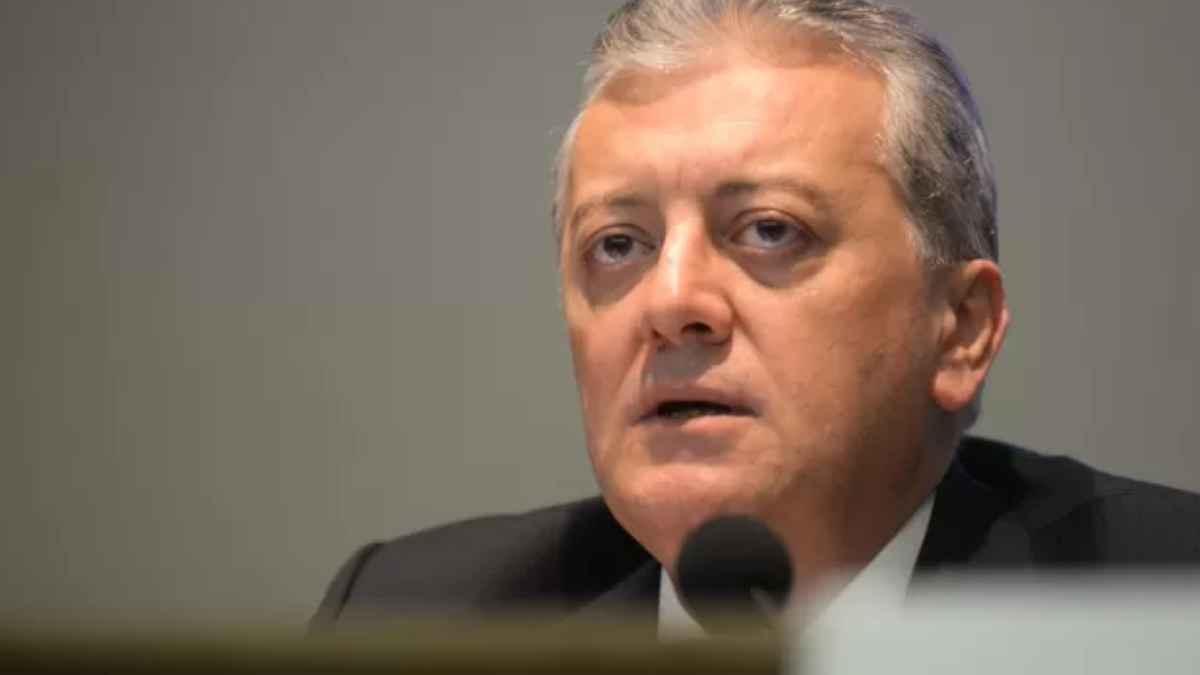
Aldemir Bendine’s progression from being a young apprentice in a local branch of a bank to ultimately leading two of Brazil’s major state owned enterprises is a remarkable illustration of his unyielding determination and constant climb through institutional hierarchies. Having been born on December 10 1963 in Paraguau Paulista – a town located in the interior of So Paulo – his family life was quite simple. His father was a traveling sales representative for a company while his mother did all the housework. The family situation was very limited, still their bond was strong and they provided a stable atmosphere for the upbringing of a boy who would ultimately be the head of one of the largest public institutions in Brazil.
He started working at Banco do Brasil, a commercial and industrial bank in Brazil operated by the federal government as a junior apprentice when still under fourteen or fifteen years old in 1978. He mainly carried out the tasks such as errand running and other daily support work at the branch. His job became permanent after passing a public competitive exam some four years later. He abandoned the civil engineering studies he had begun in Presidente Prudente for the banking sector where he decided to build his whole career. He studied at a university where he did his bachelor’s degree followed by his postgraduate qualifications in business management with specialization in management at the executive and finance area.
Bendine steadily went up the career ladder from frontline service, department heads to executive levels within different business lines like branch operations, credit cards, retail banking, and higher leadership roles. As a result, in April 2009, the country’s bank for development, Banco do Brasil, appointed him as its president a post which lasted until early 2015. Aldemir Bendine oversaw the growth of the bank’s credit portfolio which more than doubled in the early years of his leadership. A key thing of his leadership was driving the bank’s credit portfolio expansion through initiatives that widened access to finance. He was also instrumental in the implementation of government economic priorities, which include lowering interest rates and increasing lending. International growth remained one of the major directions. For example, Bendine led the acquisition of majority shareholding in Argentina’s Banco Patagonia.
Bendine also took the lead in successful share offerings of BB Seguridade which became one of the highpoints of his tenure. Bendine, who by that time had developed a good understanding of banking and had established a reputation as a successful manager was the bank president. His ability to get things done made him very popular.
In February 2015 during a time when there was intense pressure on the bank institutions as well as the markets, the then president and head of Banco do Brasil, Paulo Csar Lopes, named Aldemir Bendine as the new chief executive of Petrobras, a state-owned Brazilian oil giant. It was the worst phase ever that Petrobras had ever been exposed to corruption allegations that were massive with the resulting fallout of its debt and In reality the prices of oil were going down around the world. He was Still only allowed to stay in his position for a few months until May 2016 and his main focus was on the restoration of operational credibility, the submission of overdue audited financial reports, and the improvement in the company’s cashflow. He was up against some heavy obstacles, and besides being at the helm, he was not with the office for a lengthy time. Still, this is the first time when the company has chosen from its ranks the one who has been through political-party affiliation and a career public servant.
Bendine was definitely not free of controversy. By 2017, the investigations related to Operation Car Wash were pointing at him, legal proceedings were brought against him involving detentions and court decisions were made. Yet, he has always maintained innocence. Eventually, he got back to financial sector as a leader in the company. The story of his career of more than forty years is quite impressive. Starting from small positions he climbed the ladder, eventually reaching the presidencies of Banco do Brasil and Petrobras. His path from the office boy in regional branch shows that through hard work, persistence with a large organization and staying loyal to the system will ultimately result in success, which in the end was quite a reward.
He is a person who has remained very loyal to an organization and has achieved great results by slowly working toward his goals. In a sense, the story of Bendine represents an ambitious man who through years of work has become the president of the two most prestigious Brazilian public enterprises and his story is an example of how commitment can result in career opportunities and recognition.