

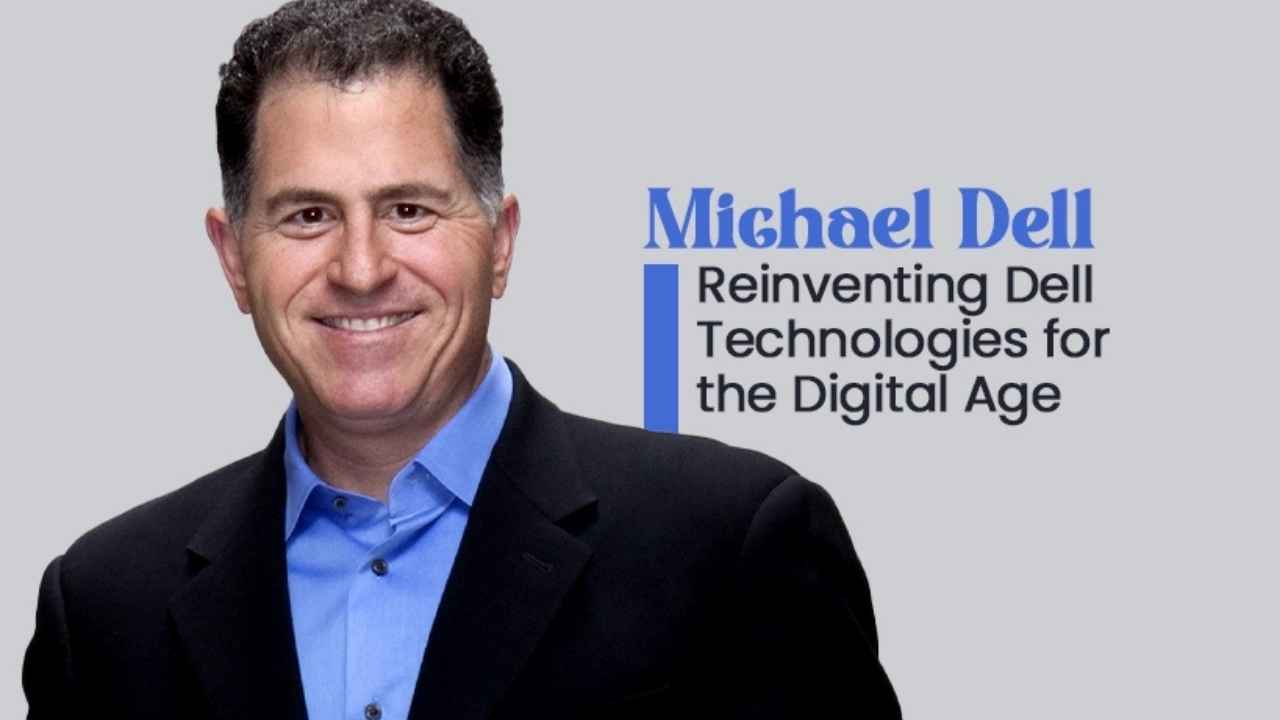
Introduction: A Tech Giant Who Changed the PC Business
Michael S. Dell is one of the most important people in the history of modern technology. He is the founder, chairman, and CEO of Dell Technologies. Dell’s journey shows how powerful innovation, strategic foresight, and never-giving-up determination can be. He went from building computers in his college dorm room to running one of the world’s largest technology companies. Dell Technologies is now a global leader in personal computing, enterprise solutions, cloud infrastructure, and digital transformation services thanks to his leadership.
Michael Dell’s story isn’t just about starting a business; it’s also about changing how technology connects people, businesses, and ideas around the world. His vision started in 1984 and is still growing today.
Early Life: The Beginning of an Entrepreneurial Mindset
Michael Saul Dell was born on February 23, 1965, in Houston, Texas. From a young age, he showed an interest in business and a desire to learn. Dell’s father was a stockbroker and his mother was an orthodontist. From a young age, he was very interested in both business and technology.
He took apart his first computer when he was only 12 years old to learn how it worked. This way of learning would later shape his management style at Dell Technologies. Dell showed that he had an entrepreneurial spirit in high school by starting small businesses, such as selling newspaper subscriptions and putting his savings into stocks and precious metals.
His desire to start his own business grew even stronger when he started studying pre-med at the University of Texas at Austin. Instead of studying medicine, Dell started putting together and selling custom computers from his dorm room. Within a year, that small business grew into a successful one that would soon change the whole PC industry.
The Beginning of Dell Computer Corporation
Michael Dell started PC’s Limited in 1984 when he was only 19 years old. This was the first step toward Dell Computer Corporation. He put in $1,000 to start the company. He had a revolutionary business model: sell computers directly to customers instead of through stores, which cut costs and sped up the delivery of personalized solutions.
This model, which went straight to the customer, let them order exactly what they wanted, which was a level of personalization that was unheard of at the time. The method not only brought down prices, but it also built Dell’s reputation for being efficient, satisfying customers, and coming up with new ideas.
In 1985, Dell released the Turbo PC, the first branded computer from his company. It quickly became popular. In just a few years, Dell Computer Corporation became one of the fastest-growing tech companies in the US.
Rapid Growth and Leading the Industry
Dell grew very quickly in the 1990s. Michael Dell led the company to grow around the world and become known for high-performance, low-cost computing solutions.
Dell went public in 1988 and made $30 million in its first public offering. This made the company worth $85 million. By the end of the 1990s, Dell had overtaken big names like Compaq and IBM to become the world’s top PC maker.
Michael Dell’s way of running things was based on being flexible and efficient. He brought in cutting-edge supply chain systems, just-in-time manufacturing, and an online ordering system that changed the way tech companies do business online. The whole industry looked to the company as a model because it could make and ship custom-built PCs faster than its competitors.
Dell’s Growth: More Than Just PCs
At first, the company was known for its personal computers, but Michael Dell had big plans for the future that went beyond hardware. He knew early on that data, connectivity, and business solutions would be the future of technology.
As part of its strategy to grow, Dell added servers, storage, networking, and IT services to its product line in the 2000s. The company started working with businesses and government agencies, making it a major player in enterprise technology.
Dell Computer Corporation changed its name to Dell Inc. in 2003 to show that it was becoming a full-service technology company. Dell stayed profitable even though the PC market was getting more crowded and competitive because it changed its focus to services and infrastructure.
Dell Technologies’ Move to Private Ownership and Change
In 2013, Michael Dell made one of the most important decisions of his career when he bought the company for $24.9 billion, the largest buyout in tech history at the time.
The move gave Dell time to reorganize and refocus without Wall Street’s short-term pressures. Michael Dell worked with the investment firm Silver Lake to make Dell the best company in enterprise IT and cloud computing.
His plan led to the $67 billion purchase of EMC Corporation in 2016. This was the biggest technology merger ever. Dell Technologies was formed as a result of this deal. It is a group of companies that includes Dell, EMC, VMware, and other companies that focus on cloud infrastructure, data storage, cybersecurity, and virtualization.
With this purchase, Michael Dell made his company a major player in the digital transformation era, going up against big companies like IBM, HP, and Amazon Web Services.
Leadership Philosophy: Innovation, Simplicity, and Customer Focus
Michael Dell’s way of leading is based on three main ideas: being creative, keeping things simple, and putting the customer first. He thinks that using technology can help customers and make hard problems easier to solve.
He runs things in a practical, data-driven way that is also very human. Dell encourages a culture of openness, where all ideas are valued, no matter what level of management they come from. He believes that the best new ideas come from trying things out and listening to customers to learn about their changing needs.
Dell’s focus on being flexible has also helped the company stay strong during times of change. Dell Technologies is still doing well under his forward-thinking leadership, whether it’s adapting to the rise of cloud computing or the move to hybrid work after the pandemic.
The Michael & Susan Dell Foundation and giving back
Michael Dell is famous for more than just business; he is also a well-known philanthropist. The Michael & Susan Dell Foundation was started by him and his wife Susan in 1999. It works to improve education, healthcare, and economic opportunities for families and children all over the world.
The foundation has given more than $2 billion to projects that help kids learn early, get ready for college, change the way education works in cities, and improve health around the world. Its effects can be felt in the US, India, and South Africa, where millions of people have been helped by new, data-driven philanthropy.
Dell’s way of giving is like his business philosophy: it is strategic, makes a difference, and can grow. He believes in solving systemic problems with measurable results and putting long-term empowerment ahead of short-term relief.
Honoring and remembering
Michael Dell has won many awards for his work in technology and business. TIME magazine named him one of the 100 most important people in the world, and Forbes always puts him among the top business leaders in the world. He also won the Bower Award for Business Leadership.
Dell Technologies has not only survived decades of rapid technological change under his leadership, but it has also kept changing, which is a rare thing in an industry known for being unstable and disruptive.
Dell Technologies now works in more than 180 countries and serves millions of customers, from small businesses to Fortune 500 companies. Michael Dell still puts a lot of money into AI, edge computing, cybersecurity, and sustainability, which are all areas where the company is still at the cutting edge of new ideas.
In conclusion, the legacy of a visionary leader
Michael S. Dell’s rise from a college dorm room to the top of a global tech empire shows how important it is to have a vision, be strong, and be willing to change. His story shows how new ideas and a focus on the customer can change whole industries.
Dell is still leading the digital transformation of businesses around the world more than 40 years after he started his company. His legacy goes beyond just hardware; he believed that technology should help people reach their full potential and that the future belongs to those who are brave enough to change it.
Michael Dell is not just a CEO; he is a pioneer in modern computing and a living example of how to be a great entrepreneur.